

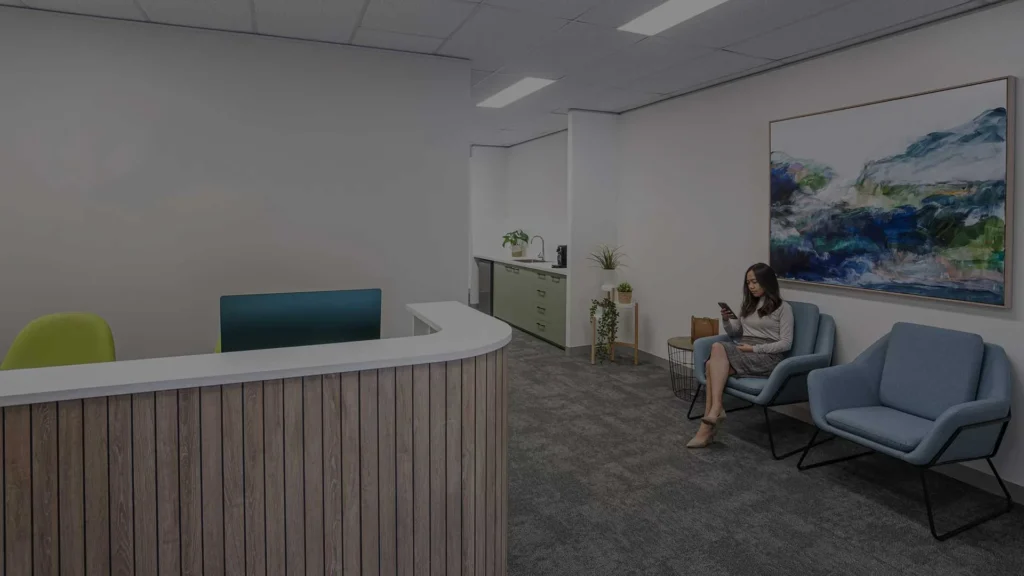
Across Australia, expectations around healthcare spaces have changed. A medical fitout is no longer just about meeting compliance or fitting equipment into place. It shapes how patients perceive care and how effectively teams deliver it.
At the centre of this is a familiar challenge of providing comfort, privacy and reassurance to patients. Also, the staff needs efficiency, access, and clarity to perform under pressure. When these needs are treated separately, the result often feels uneven.
The goal is not to prioritise one over the other. It is to design a space where both can function naturally, without conflict.
What Defines a Successful Medical Fitout?
Every medical fitout in Australia starts with compliance. The National Construction Code, infection control standards, and accessibility requirements under the Disability Discrimination Act are all key considerations. These codes ensure safety and accessibility, providing the foundation for any medical environment.
Yet compliance alone does not create an effective environment. A medical clinic may comply with every requirement of the codes and still be inefficient or uncomfortable to use. The key is the way the space supports the operation of the business.
For example, the placement of treatment rooms, storage areas, and reception areas plays a significant role in the efficiency of the clinic. When these areas are planned thoughtfully, staff have less time wasted moving around the clinic and more time to devote to patients.
On the other side of the equation are the patients. A space that is orderly and well-considered tends to build quiet confidence. It suggests that the same level of care extends beyond the physical setting.
Also Read – Medical Fitout: Everything That You Should Understand
The Role of Patient Experience in Medical Design
For most patients, a medical visit comes with some level of unease. The design of the space can either heighten that feeling or help settle it.
Privacy is often the first concern. Patients need to feel that conversations and interactions are handled with discretion. This can be affected by something as simple as the position of a reception desk or the distance between rooms.
Another factor is the atmosphere of the environment. Too much bright light and noise can be overwhelming for patients. However, soft light and minimal noise, along with a clutter-free environment, provide a composed environment. It doesn’t necessarily need to be luxurious, just thought out.
Another factor is the clarity of the environment. If patients are able to move from one location to another without hesitation, it eliminates a level of confusion. They are not made to look around and wait for instructions.
While these factors may seem minor, they contribute significantly to how comfortable a patient is before they are seen by a practitioner.
Also Read – What is a Retail Fitout? How to Use Brand Storytelling to Boost Sales?
Designing for Staff Collaboration and Efficiency
While patients experience the space in short visits, staff interact with it continuously. The design must support that ongoing use.
Efficiency often comes down to movement. When essential areas are logically placed, it is possible for staff to move from one task to another easily. In a busy clinic, it is important to reduce delays since they can add up over a period.
Another factor is access. Access to equipment and resources should be easy. If it is not, it can cause undue pressure in a situation that is already challenging.
Finally, there is the aspect of collaboration. Staff should be able to communicate easily. This is possible when they are close to one another. At the same time, they should be able to withdraw to areas where they can concentrate.
There is also the physical aspect of a workday. A work environment should be designed in such a manner that it reduces the chances of staff getting tired. This is especially possible when there is a clear path for movement and the areas for work are well positioned.
Also Read – What is a Retail Fitout? How to Use Brand Storytelling to Boost Sales?
Where Patient Experience and Staff Needs Intersect
In practice, there are many design decisions that benefit both staff and patients at the same time.
One of the best examples of this is zoning. When there are different areas for different people, the space feels more organised. Patients are asked to stay within defined areas, and staff can get on with their jobs without interruptions from others.
Another benefit of good design is that there can be better flow. A well-designed space that encourages movement can make life easier for everyone. Patients can get through their appointments without interruptions, and staff can get on with their jobs without interruptions too.
What you end up with is a space that feels organized in a good way. People know where they need to be, and transitions happen without unnecessary effort.
Rather than addressing each need separately, this approach looks at how the space functions as a whole. The result is a more stable and efficient environment.
Practical Design Strategies to Achieve Balance
A well-balanced fitout starts with understanding how the space will be used each day. From there, zoning becomes more natural, with each area supporting a specific function.
Flexible spaces can make a significant difference. Rooms that can serve multiple purposes allow practices to adapt without needing additional space. This is particularly useful in smaller clinics.
Technology helps streamline daily operations. Digital check-ins, efficient record systems, and organised storage reduce unnecessary movement and simplify processes for both patients and staff.
Material selection also plays a part. Surfaces should be durable and easy to maintain, while still contributing to a calm environment. The aim is to support function without creating a harsh or sterile feel.
Also Read – Sustainable Practices in Commercial Office Fitouts
Conclusion
Medical fitout design is not about choosing between patient comfort and staff efficiency. Both are essential, and both influence how a space performs over time.
When the balance is right, the environment supports everyone within it. Patients feel more at ease, and staff can work with fewer disruptions. The space itself fades into the background, allowing care to take focus.
As healthcare continues to evolve across Australia, expectations around these environments will only increase. Practices that invest in thoughtful, well-planned fitouts are better positioned to meet those expectations, both now and into the future.
As expectations around healthcare spaces continue to shift, having the right team behind your fitout becomes increasingly important. Juma Projects works closely with medical practices across Melbourne to deliver spaces that feel considered and function with ease. From early planning through to completion, our approach is grounded in how your practice operates day to day. If you are looking to create a medical environment that supports both your patients and your team, reach out to us to begin the conversation.