

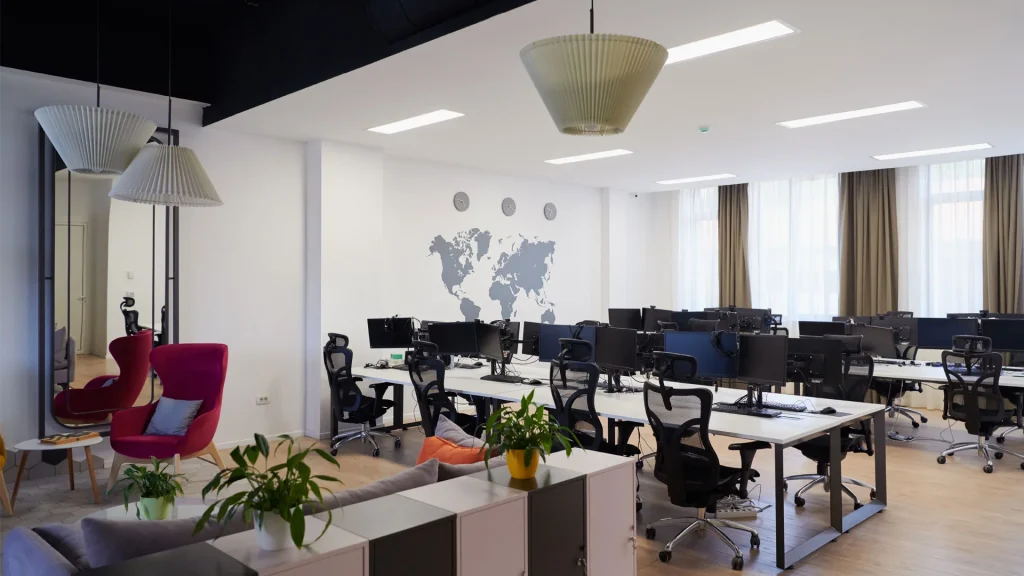
Looking for ways to elevate your commercial office in Melbourne? Lighting can prove to be one of the most effective places to start. Although it is often considered a practical necessity, the right lighting can make all the difference. It can brighten the workplace, complement the interior, influence the atmosphere of the office, and make different spaces more comfortable.
Whether you are planning a completely new commercial office fitout or refreshing the existing place, lighting should be considered alongside your furniture, layout, and overall design. From providing a comfortable illumination across workstations to creating a welcoming reception area, the right lighting can help bring your office design together.
This guide will help you understand the role of lighting in enhancing commercial office fitouts in Melbourne. Keep reading to gain insights.
Why Is Lighting Important in a Commercial Office Fitout?
Lighting has both a visual and functional role in an office space. Employees spend hours working at their desks, attending meetings, and using computers. Poor lighting can make these activities less comfortable and can hamper the productivity of employees.
Beyond the practical aspects, lighting plays a powerful role in shaping how a space feels. A well-lit office space can appear more welcoming, spacious, and professional, while a poorly-lit one can feel cramped and dull. This is why during a commercial office fitout, lighting should never be an afterthought; it should be considered from the early stages.
Good lighting can also work alongside natural daylight to create a balanced environment. With careful planning, lighting can complement the natural light while helping maintain consistent illumination throughout the day.
Finally, lighting has a direct impact on safety. Dim or uneven lighting in walkways, stairwells, or shared areas can increase the risk of trips and falls, while overly bright or glare-heavy lighting near screens can cause visual discomfort. A well-considered lighting plan balances all these factors to create a workspace that is safe, functional, and pleasant to be in.
Also Read – Eco-Friendly Practices In Commercial Office Fitouts
Different Types of Lighting for Commercial Offices
A well-designed commercial office fitout layers several types of lighting, instead of relying on a single source. This approach ensures that different tasks and areas are highlighted appropriately. A few different lighting types are:
Task Lighting
As the name suggests, task lighting is focused on specific tasks and activities like reading documents, performing detailed tasks, and working at a desk. It reduces strain on employees’ eyes and provides brighter and more direct lighting where it is required.
Ambient Lighting
This type of lighting is used to give a space overall illumination. It is usually provided by ceiling-mounted fixtures like downlights and panel lights. Ambient lighting ensures that the entire office space has consistent lighting.
Accent Lighting
Accent lighting is used to highlight particular features. It can be pointed towards artwork, architectural elements, or feature walls. It is used to bring attention to a specific feature in your office.
Decorative Lighting
This type of lighting plays a great role in creating the character of an office. Pendant lights, statement fittings, and contemporary fixtures can complement the company’s branding and interior design.
Choosing the Right Lighting for Different Office Spaces
Every area of your commercial office has its own lighting needs. During a commercial office fitout, lighting should reflect how each space will be used.
Reception Areas
The reception is the entrance point of your office space.. Good lighting can help establish a good impression on a first time visitor while making the space feel comfortable and easy to navigate.
A combination of accent and ambient lighting can create a welcoming atmosphere while drawing attention to necessary aspects – company branding, logo, reception desk, or other architectural features.
Open-Plan Spaces And Workstations
Open-plan workspaces require careful lighting as employees work at screens for an extended period of time. Lighting should be evenly distributed across the space to avoid harsh contrasts.
The position of light fittings is particularly important. Plan fixtures alongside desk layouts, computer screens, and other workspace elements. Where natural light is available, artificial lighting can be adjusted to work alongside it.
Boardrooms and Meeting Rooms
The aesthetic of boardrooms and meeting rooms should reflect the professional image of the business while creating a space for important discussions, collaborations, and presentations.
A boardroom requires flexible lighting solutions, like dimmable fixtures, as these spaces can range from a formal presentation to informal discussions.
Breakout & Lounge Areas
These areas are meant for relaxation and informal conversations. They can benefit from softer lighting that creates a comfortable atmosphere. Pendant lights over kitchen benches or dining areas can combine practical illumination with an attractive design feature. The lighting can also help visually separate breakout zones from the main workspace.
Corridors & Circulation Areas
In order to maintain safe and comfortable movement in the office space, corridors and other circulation areas must be appropriately lit. These do not require the same lighting as workstations, but they should be visually connected with the rest of the office. Linear lighting, recessed fixtures, or strategically positioned downlights can provide a clean appearance while maintaining consistent illumination.
Also Read – 5 Ideas How To Use Wood In An Office Fitout
Energy-Efficient Lighting for Modern Office Fitouts
If you are planning a commercial office fitout, then make sure you opt for energy-efficient lighting options. Lighting can contribute to a workplace’s energy consumption, so selecting efficient fixtures can make a difference in the long-term.
LED lighting is widely used in commercial environments as it provides efficient illumination and a long operating life. This can help reduce the frequency of lamp replacement and can contribute to lower energy usage.
Lighting controls can provide another opportunity to improve efficiency. Occupancy or motion sensors can switch lights on or off depending on whether an area is being used. This can be particularly useful in meeting rooms, storage areas, bathrooms, and other spaces that may not be occupied continuously.
Dimming controls can also allow lighting levels to be adjusted according to the time of day or activity. For example, artificial lighting may need to operate at a lower level when a workspace receives substantial natural daylight.
Energy efficiency should not mean sacrificing comfort or design. The aim is to find a balance between illumination, usability, appearance, and ongoing operating requirements.
Conclusion
From illuminating the space to creating a healthy and secure work environment, lighting
plays a vital role in a commercial office fitout. If you need some guidance or assistance with your commercial office fitout in Melbourne, Juma Projects can help. Starting with an initial consultation, we take the time to understand your needs, your office layout, and what you want to achieve from the finished space.
Transform your commercial office space in Melbourne with our expert fitout solutions.