

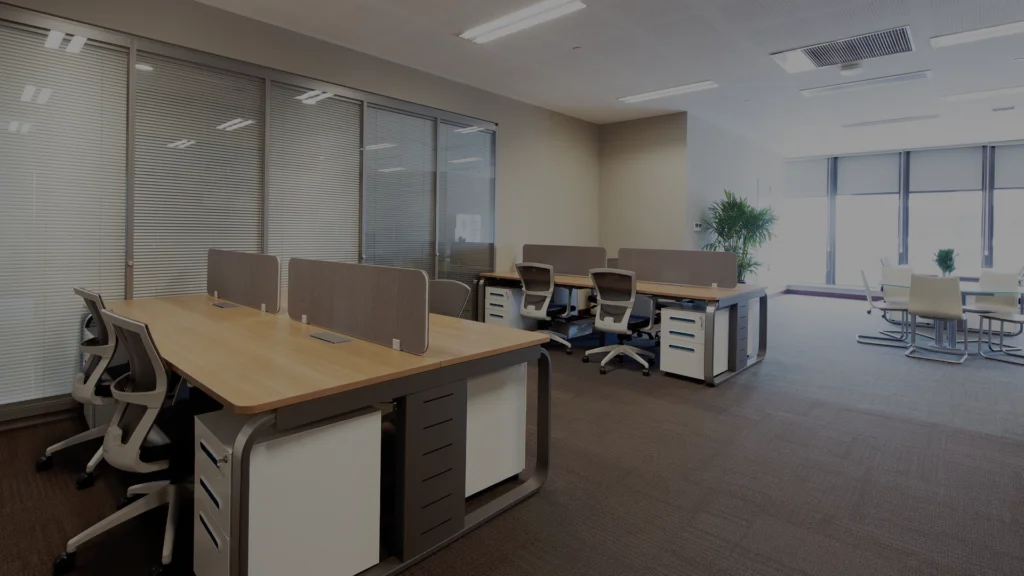
Hybrid work has changed how offices are used, not just how often they’re occupied. In many Australian workplaces, attendance now fluctuates across the week. Some days feel full and collaborative. Others are noticeably quieter, with large parts of the floor sitting unused.
This uneven use has exposed the limits of traditional office fitouts. Spaces designed around fixed desks and predictable routines often struggle to support teams that move between remote and in-office work. As a result, many businesses are reassessing what their office is meant to do, and how it should support staff when they choose to come in.
Designing for flexibility has become central to that conversation. Not as a trend, but as a practical response to how work actually happens now.
Also Read – How To Select The Right Office Fit Out Contractors In Melbourne?
Why the old office model no longer fits
Traditional offices were designed around predictability. Fixed desks, assigned seating, meeting rooms booked weeks ahead, storage for everyone. It made sense when most staff were present most days, but now, hybrid work breaks that model.
In most cases, not everyone is in the office at once. Some teams come in for collaboration days, others rotate. Some roles are mostly remote, but still need space when they do come in. The result is often wasted space or, worse, the wrong space in the wrong places.
You might notice it in offices that haven’t adapted. Empty desk banks next to overbooked meeting rooms. Staff taking calls from hallways. People competing for quiet corners because there aren’t enough enclosed spaces. A flexible fitout aims to smooth those pressure points.
Designing for movement, not permanence
One of the biggest mindset shifts in hybrid office design is letting go of permanence. Not every desk needs to belong to someone, not every room needs a single purpose.
Hot-desking is part of this, but it only works when it’s done properly. That means desks that are genuinely ready for anyone to sit down and work. Power where you expect it, screens that connect easily and chairs that adjust without a manual.
Storage changes too. Personal lockers tend to replace pedestal drawers. It’s a small detail, but it affects how people feel when they come in. The staff can store their bag, jacket, or laptop securely, without any hassles, marking a convenient start to their day, every time.
Flexibility also shows up in layout. For instance, lightweight partitions that can be moved or removed are gaining more popularity as they make ways for spaces that can grow or shrink without ripping out half the floor.
Also Read – How To Plan A Commercial Fitout In Melbourne On A Budget?
Spaces that support different types of work
Hybrid work hasn’t reduced the need for offices but has changed how an office space is used. Now people come in to collaborate, solve problems, and reconnect with their team. A flexible fitout reflects that shift. Collaboration zones become more important. These don’t always need to be formal meeting rooms. Sometimes it’s a cluster of tables near a whiteboard. Sometimes it’s soft seating where people can spread out plans or laptops.
At the same time, quiet spaces matter more than ever. When someone does need to focus or take a video call, they shouldn’t have to improvise. Phone booths, small enclosed rooms, and acoustic treatment all play a role here. In open-plan offices especially, sound control is often underestimated until staff start avoiding the space altogether.
The balance isn’t exact as some offices need more quiet rooms than expected, others find their breakout areas are underused. Some variation is normal, so a good fitout should leave space for adjustment over time.
Also Read – How Long Does An Office Fitout Take?
Technology as part of the fitout, not an add-on
Hybrid work relies heavily on technology, and the physical space needs to support it. Meeting rooms are a common pain point. Screens that don’t work, cables that disappear, microphones that pick up everything except the speaker. These issues aren’t just annoying, they actively discourage staff from using the office.
In a well-planned fitout, technology is considered early. Screens are placed where everyone can see them. Cameras are positioned for hybrid meetings, not just in-room ones. Power and data are accessible without trailing cords across walkways.
You’ll also see more emphasis on shared tech rather than personal setups. Docking stations, wireless presentation systems, and reliable Wi-Fi across the entire floorplate. When staff don’t have to troubleshoot every time they come in, the office becomes a place that supports work rather than slows it down.
Also Read – How To Achieve The Ultimate Office Fit-Out In Melbourne
Making flexibility feel intentional, not chaotic
There’s a risk with flexible offices that they feel unfinished or temporary. Desks that look like they could be moved at any moment, spaces that don’t quite settle. That usually comes down to design discipline.
Flexible doesn’t mean random. Materials still matter and so does consistency. Using a clear palette, durable finishes, and thoughtful zoning helps spaces feel stable even if they’re adaptable. Australian offices also need to consider local conditions. Natural light, glare control, and thermal comfort all affect how spaces are used. In warmer climates especially, poorly positioned desks or meeting rooms can end up avoided entirely. Flexibility includes the ability to shift layouts in response to these realities, not just organisational changes.
Planning for change, not just today
One of the biggest mistakes in office fitouts is designing too tightly around current needs. Headcounts change, teams grow or shrink and hybrid policies evolve, a flexible fitout anticipates that. That might mean allowing for future meeting rooms without building them now. It might mean selecting furniture systems that can be reconfigured rather than replaced or leaving some areas deliberately open-ended.
This kind of planning doesn’t always cost more upfront. In many cases, it saves money over the life of the office by avoiding repeated refurbishments.
The human side of hybrid offices
It’s easy to talk about flexibility in abstract terms. But at the end of the day, offices are for people. If a space feels uncomfortable, confusing, or impersonal, it will bring down staff productivity. That’s true no matter how efficient the layout looks on paper.
Good hybrid offices acknowledge that not everyone works the same way. Some people need a routine, others like variety. Some thrive in busy environments and others need a quiet space to do their best work. So, be sure to design a space that gives people options and respects their time when they come in.
Also Read – Office Fitout Costs Guide 2025
Bringing it together
Office fitouts for hybrid work aren’t about chasing trends. They’re about responding honestly to how work has changed. Flexibility shows up in layout, furniture, technology, and planning. It requires letting go of some old assumptions and paying closer attention to how spaces are actually used. When done well, a hybrid office becomes a place people want to be. Not because they have to, but because it helps them work better together.
Looking to adapt your office for hybrid work? At Juma Projects, we work with Australian businesses to design and deliver office fitouts that are practical, flexible, and built for how people really work today. If you’re planning a new space or rethinking an existing one, speak with our team to explore fitout solutions that can evolve with your business.